
How it works
Created by scientists,
endorsed by doctors
Our understanding of depression has evolved significantly. For decades, it was believed depression was due to a “chemical imbalance” in the brain, particularly involving serotonin. Modern research reveals a more nuanced picture.
Recent scientific evidence shows that depression affects the brain’s overall function and activity patterns. This explains why recovery isn’t as simple as restoring chemical levels – and why people can’t simply ‘choose’ to feel better.
Depression physically changes how the brain works, which is why treatment needs to address brain function directly. Flow’s approach is based on this current understanding, using gentle neurostimulation to help restore healthy brain activity patterns.

Improve your mood
Improve your motivation
Depression affects a key region of your brain called the dorsolateral prefrontal cortex (DLPFC). When you’re experiencing depression, the brain cells in this area become less active, disrupting their natural electrical communication patterns.
The DLPFC helps regulate your mood and emotional wellbeing. When its activity is reduced, you may experience:
- Persistent low mood
- Loss of interest or pleasure in activities you once enjoyed
- Changes in sleep and appetite
- Difficulty concentrating
- Reduced motivation and energy
Your brain communicates through electrical signals. Flow works with this natural electrical language, delivering precisely calibrated stimulation (2mA, the equivalent of a AA battery powering a digital clock or a TV in standby mode) directly to the DLPFC. This gentle current helps restore healthy brain cell activity patterns, targeting depression at its source to help relieve symptoms.
Symptoms improvements after 10 weeks with Flow
A rigorous clinical trial showed significant improvements after 10 weeks of use. In this randomised placebo-controlled study – considered the gold standard in medical research – users experienced measurable benefits across all tracked symptoms.
Source: Woodham, R.D., Selvaraj, S., Lajmi, N. et al. Nat Med (2024)
Mood
+37%
Focus
+31%
Sleep
+25%
Zest for life
+32%
Decreased anxiety
+31%
Emotional involvement
+35%
Effortless set up
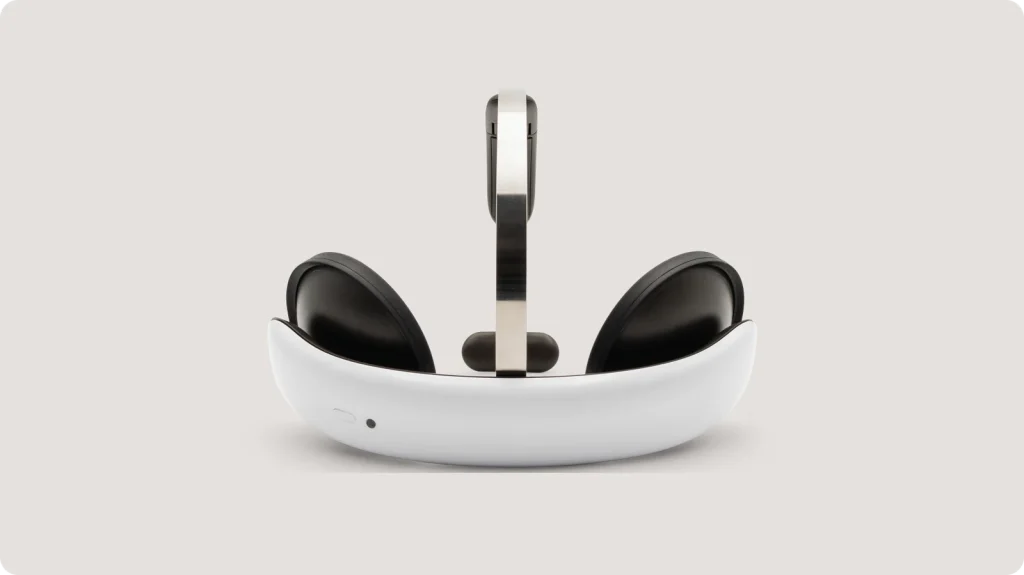
Order the Flow Headset
Delivered in 1-3 working days.
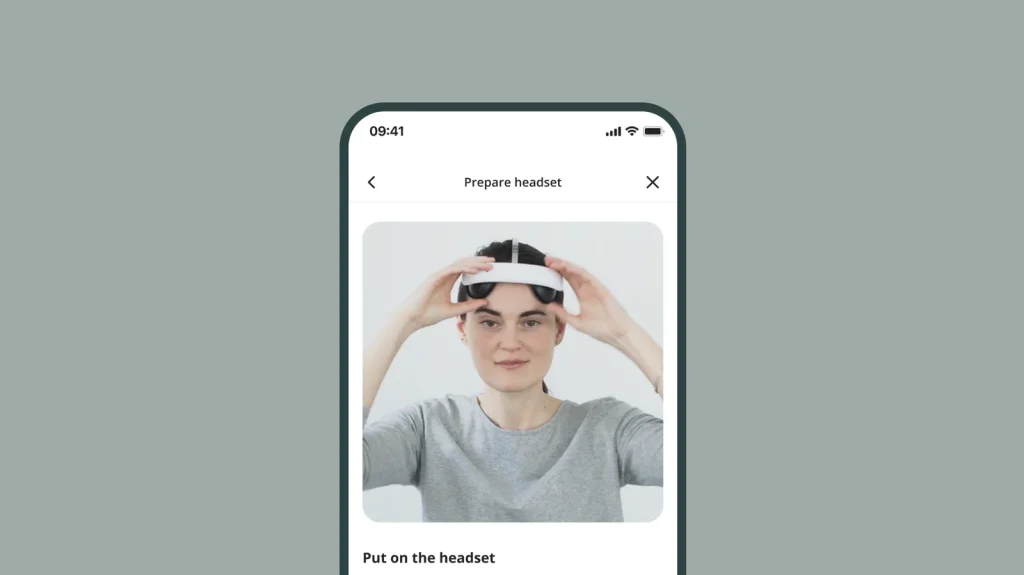
Download our free app
Connect your headset to your phone via bluetooth and start stimulating.
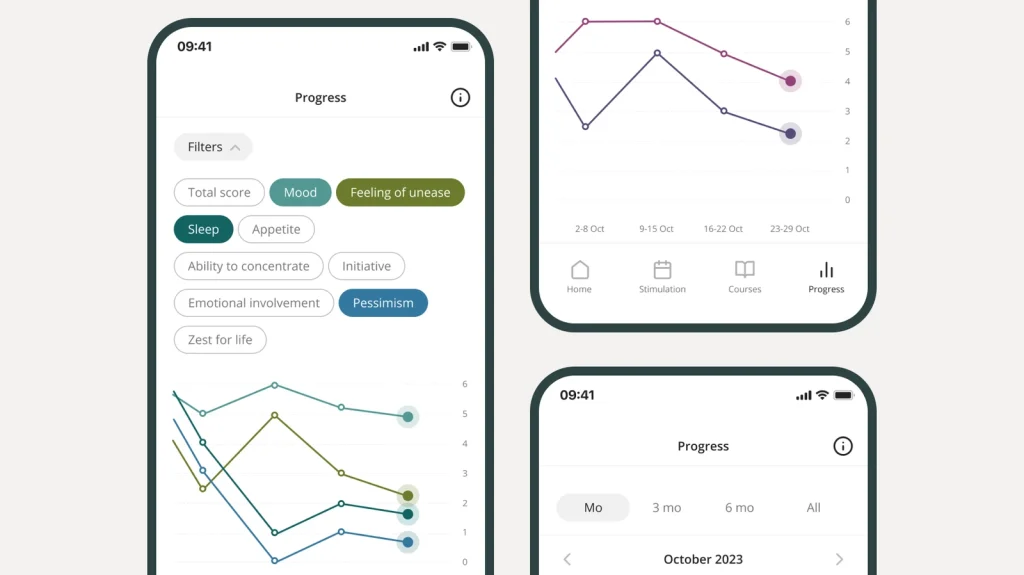
Order the Flow Headset
Track your mood, sleep, appetite, concentration levels and more, to understand what impacts your depression and see improvement.
No serious side effects
Your safety is our priority
In over two decades of research on tDCS (the technology Flow uses), no serious side effects have been reported. This strong safety profile is why Flow is approved for over-the-counter use without requiring a prescription.
Most users experience only mild, temporary side effects. These are generally well-tolerated, with most users reporting the sensations become milder over time. You may also experience some skin irritation, such as redness or itchiness, which is common and temporary. Other users may notice tiredness, headaches, tinnitus (which is rare), or a slight increase in anxiety, especially at the start of treatment.

Feel better in 3 weeks
Use for a minimum of 6 months
Most people begin seeing improvements around 3 weeks of using Flow. However, research shows that the first 6-12 months after successful treatment are crucial for preventing depression relapse. During this period, your brain may be more vulnerable to returning to depressive patterns. Continuing Flow treatment for at least 6 months helps maintain your progress and supports your brain’s long-term recovery.
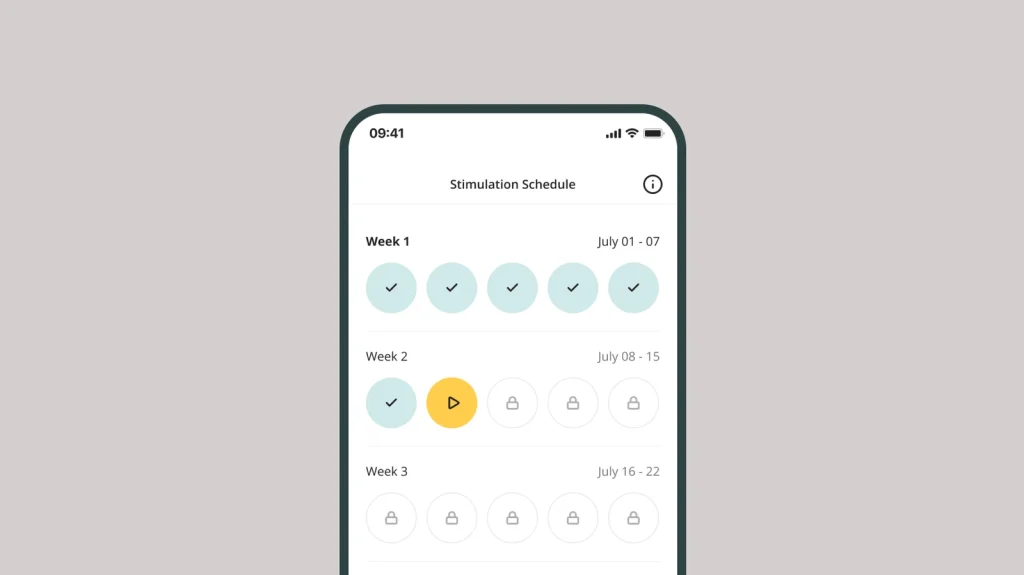
Activation phase
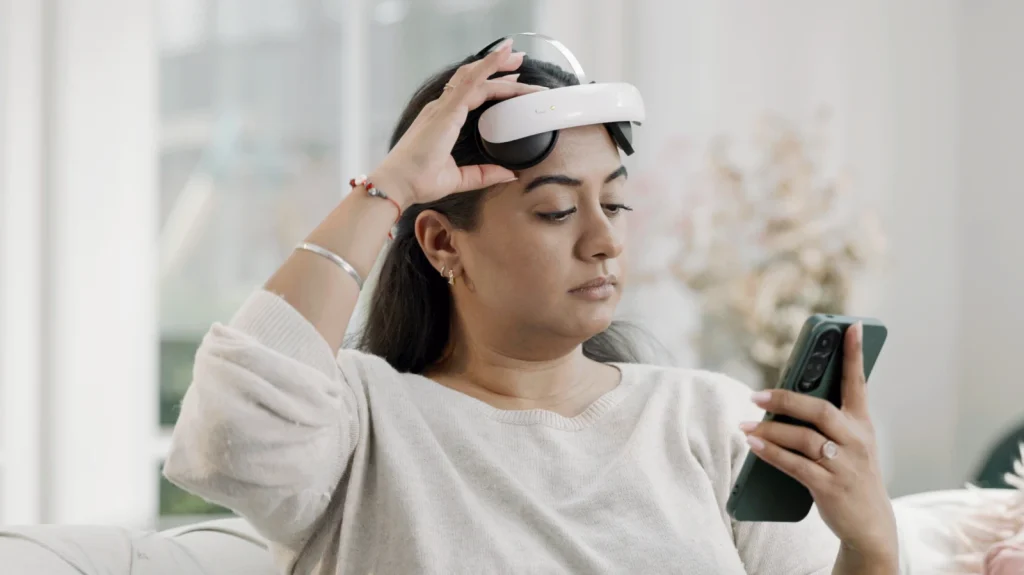
Use the headset 5 times a week, for the first 3 weeks.
Strengthening phase
Continue with your treatment, but reduce down to twice a week until you have a finished the full 10 week treatment cycle.

Maintenance phase
At 10 weeks you can either reset the headset to increase the number of sessions per week if you require a stronger effect, or continue 2x week.
FAQs
Electroconvulsive therapy (ECT) is a form of brain stimulation used to treat severe depression, especially in cases where other treatments have been ineffective. Although ECT may have a negative image in popular media, modern ECT remains in use today, including in the NHS, because of its effectiveness in treating the most severe cases. Flow does not use ECT. It uses transcranial direct current stimulation (tDCS), a different technology that delivers a very low electrical current that is 400 times lower than ECT to stimulate your brain. Since the brain relies on electrical impulses for communication, this gentle current can help restore balance in brain activity to enhance your mood and overall well-being with minimal side effects.
Yes Flow is a tDCS home device, allowing you to use tDCS at home. Until now transcranial direct stimulation was often only available in clinics, but you can now use our tDCS device at home. If you have depression, you should be under the supervision of a doctor.
No, Flow is one way to treat clinical depression treatment without medication. Flow is recognised as a major depression treatment, and can be used without medication. Flow also treats severe depression. It is an alternative to antidepressants, and many people use Flow because it’s a non pharmacological depression treatment. You can also use Flow whilst on antidepressants.
No, Flow is one way to treat clinical depression treatment without medication. Flow is recognised as a major depression treatment, and can be used without medication. Flow also treats severe depression. It is an alternative to antidepressants, and many people use Flow because it’s a non pharmacological depression treatment. You can also use Flow whilst on antidepressants.
Yes. Transcranial direct stimulation (tDCS) is a form of neuromodulation.
Learn how Flow can help you
Join our community to learn more about Flow and how it can support your mental health.
We use email and targeted online advertising to send you product updates, promotional offers and other marketing communications. We process your personal data as stated in our Privacy Policy. You may withdraw your consent at any time by clicking the unsubscribe link at the bottom of any of our marketing emails, or by emailing us at [email protected].